
Research theme · 05
Transportation Economics
Using economic instruments — pricing, information, and communication technology — to incentivize travelers toward system-optimal choices on routes, departure times, parking, and modes.
Overview
We focus on understanding travelers' choices on routes, departure time, parking locations, and traffic modes (solo-driving, carpool, transit, etc.). We then use economic instruments to incentivize travelers to change those choices toward the optimum of the entire transportation system.
The research employs a range of mechanisms: pricing (taxes, subsidies, tolls, credits, lotteries, time-of-day pricing), information provision, and changes in travel time enabled by cutting-edge communication technologies.
Featured Projects
- CPS: Collaborative Research: Matching Parking Supply to Travel Demand towards Sustainability: a Cyber Physical Social System for Sensing Driven Parking — Co-PIs: Michael Zhang (UC Davis), Ram Rajagopal (Stanford); Team: Shuguan Yang.
- Testing and Evaluation of Curb Management and Integrated Strategies to Catalyze Market Adoption of Electric Vehicles — Team: Jiachao Liu, Tao Tao. Collaborators: LACI, NREL, USC.
- CPS: Small: Collaborative Research: Optimal Ride Service For All: Users, Service Providers and Society — Team: Zemian Ke, Matt Battifarano.
Projects
- Testing and Evaluation of Curb Management and Integrated Strategies to Catalyze Market Adoption of Electric Vehicles
Curb-management pilots in Pittsburgh and Santa Monica's ZEDZ — modeling tools, end-user research, and computer-vision deployments to inform EV adoption strategies.
Sean Qian · NSF, U.S. Department of Energy
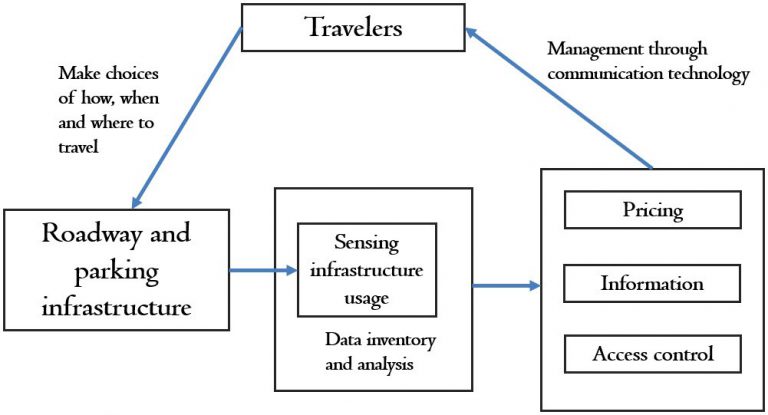 CPS: Collaborative Research: Matching Parking Supply to Travel Demand towards Sustainability
A cyber-physical-social system for sensing-driven parking that uses smart sensors, social media, and big-data analytics to match parking supply with travel demand.
Sean Qian · National Science Foundation (Cyber-Physical Systems program)
- CPS: Small: Collaborative Research: Optimal Ride Service For All — Users, Service Providers and Society
A framework for guiding emerging mobility services toward system-wide objectives via rider surcharges/credits and provider subsidies tied to performance guarantees.
Sean Qian · National Science Foundation