
Research theme · 06
Transportation Network Modeling
Inferring dynamic O-D demands and behavioral choice models to produce spatio-temporal flows consistent with real-world multi-source data.
Overview
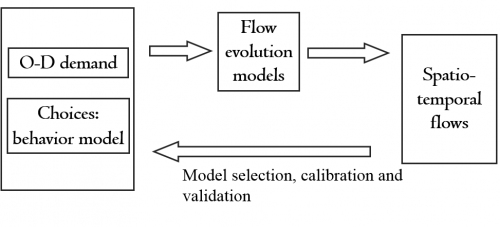
Transportation network models are central to operations and planning. Two components are fundamental: a flow model that describes how vehicles and passengers propagate through network arcs and nodes, and a behavioral model of how travelers make choices.
Our work infers and learns dynamic origin–destination (O-D) demands and behavioral choice models such that the resulting spatio-temporal flows are consistent with real-world multi-source data.
Featured Projects
- Smart Mobility Challenge: Traffic Impact of CSX Pittsburgh Intermodal Rail Terminal and Mitigation Plans for McKees Rocks — Team: Xidong Pi, Wei Ma.
- Travel Time Reliability Data Guide — Team: Shuguan Yang.
- CPS: Collaborative Research: Matching Parking Supply to Travel Demand towards Sustainability — Co-PIs: Michael Zhang (UC Davis), Ram Rajagopal (Stanford); Team: Shuguan Yang.
- Transit service performance analysis and bunching detection using automatic passenger counters (APC) and automatic vehicle location (AVL) data — Team: Xidong Pi.
- Traffic Impact of the Greenfield Bridge Closure — Team: Wei Ma.
- Dynamic Traffic Analysis and Travel Demand Management for Center City Bridge Reconstruction Plans — Team: Pinchao Zhang, Wei Ma.
- Understanding and Improving Energy Efficiency of Regional Mobility Systems — Team: Qiling Zou, Pengji Zhang.
Projects
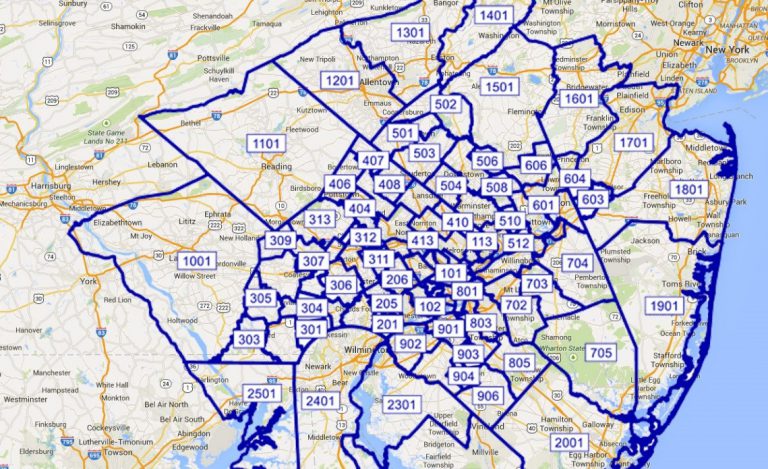 Dynamic Traffic Analysis and Travel Demand Management for Center City Bridge Reconstruction
A regional dynamic network model of the Philadelphia Metropolitan Region for predicting traffic impacts of planned and unplanned disruptions, tested on I-95 and Center City bridge closures.
Sean Qian · PennDOT, T-SET, Traffic 21
- Smart Mobility Challenge: Traffic Impact of CSX Pittsburgh Intermodal Rail Terminal and Mitigation Plans for McKees Rocks
In-depth simulation of the traffic impact of a proposed CSX intermodal rail terminal at McKees Rocks, evaluating mitigation strategies including the West Carson Street Extension and truck routing optimization.
Sean Qian · Traffic 21 / Mobility 21 National University Transportation Center
- Traffic Impact of the Greenfield Bridge Closure
Analysis of how the 18-month Greenfield Bridge closure affected highway and arterial traffic, emissions, and fuel consumption — and evaluation of mitigation strategies.
Sean Qian · Traffic21 Institute, Public Works of the City of Pittsburgh
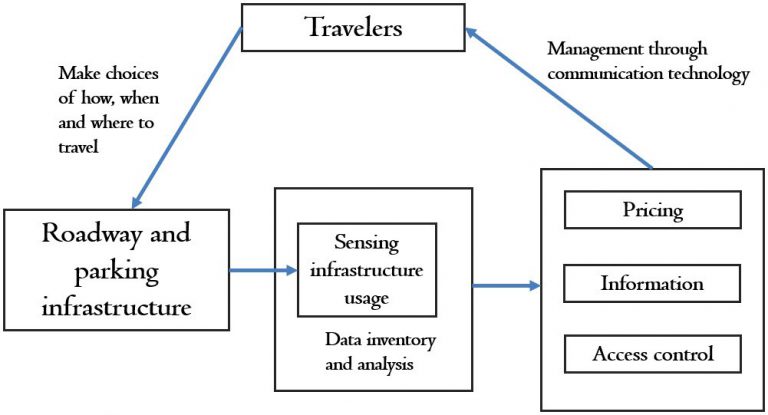 CPS: Collaborative Research: Matching Parking Supply to Travel Demand towards Sustainability
A cyber-physical-social system for sensing-driven parking that uses smart sensors, social media, and big-data analytics to match parking supply with travel demand.
Sean Qian · National Science Foundation (Cyber-Physical Systems program)
- Understanding and Improving Energy Efficiency of Regional Mobility Systems
A simulation framework that identifies energy inefficiencies across infrastructure, vehicles, and passengers — focused on solo driving, ride-sharing, and parking in regional mobility contexts.
Sean Qian · U.S. Department of Energy
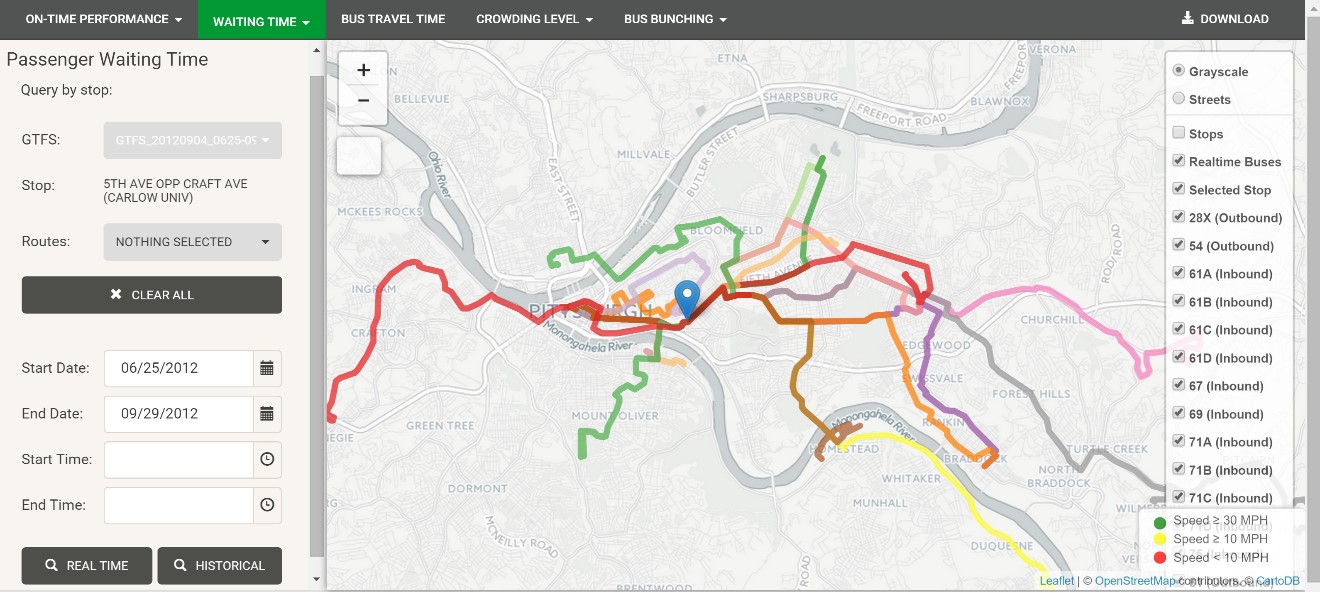 Transit Service Performance Analysis and Bunching Detection Using APC and AVL Data
Using automatic passenger counters (APC) and automatic vehicle location (AVL) data to analyze transit service performance and detect bus bunching.
Sean Qian · Pennsylvania Infrastructure Technology Alliance
- Travel Time Reliability Data Guide
Standardizing procedures for the use of data in travel time reliability analyses.
Sean Qian · U.S. Department of Transportation, Federal Highway Administration